
Masterclass Shallow Casserole Dish – Premium Cast Aluminum Cookware
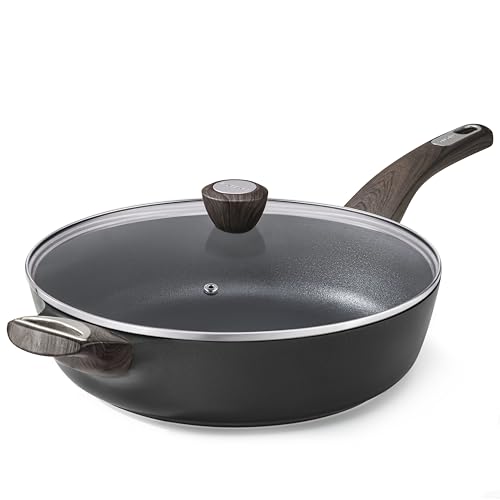
Our Masterclass shallow casserole dish combines professional-grade cast aluminum construction with a nonstick ceramic interior for effortless cooking and cleanup. The wide, shallow design excels at braising meats, simmering sauces, and baking gratins where evaporation and browning matter most.


We chose cast aluminum for the Masterclass shallow casserole dish because it eliminates hot spots that burn delicate sauces or unevenly brown proteins. The 4mm thick base absorbs heat quickly, then spreads it uniformly across the cooking surface so chicken thighs brown at the same rate whether they sit in the center or along the edge.
Ceramic nonstick interior
The ceramic nonstick coating releases eggs, fish, and cheese-heavy gratins without scraping or soaking. Unlike PTFE-based nonsticks that degrade above 500°F, our ceramic surface tolerates oven temperatures up to 450°F without off-gassing or losing its release properties.
We cured the ceramic in three separate firings to bond it permanently to the aluminum substrate. This process creates a scratch-resistant finish that withstands metal utensils during everyday cooking — though we still recommend silicone or wood to extend the coating’s lifespan. Hand washing preserves the nonstick performance longest, but the interior is dishwasher-safe when convenience outweighs longevity.
Tempered glass lid with controlled venting
The domed glass lid traps heat while giving you a clear view of bubbling sauces and browning crusts. We added a small steam vent at the apex to prevent pressure buildup that would otherwise rattle the lid or force moisture out along the rim.
That vent also lets you control reduction rates. Leave the vent fully open when you want liquids to thicken quickly, or rotate the knob to partially close it when gentle simmering is the goal. The stainless steel knob stays cool enough to adjust mid-cook without reaching for a towel, and the lid itself is oven-safe alongside the base.
Construction & design highlights
More Masterclass ovenware essentials




Customer reviews


Questions about the Masterclass shallow casserole dish
Yes, the cast aluminum base includes a magnetic stainless steel disc fused to the bottom that makes it fully compatible with induction burners. You’ll get the same even heating and quick response on induction as you do on gas or electric ranges.
The dish works on all cooktop types without requiring an adapter or interface disc. We tested it on several induction models during development to ensure consistent performance across wattage levels.
The shallow casserole dish has a wider diameter and shorter walls than a traditional Dutch oven, which makes it better suited for braising and recipes where you want liquids to reduce and concentrate. Dutch ovens excel at soups, stews, and recipes with lots of liquid that you want to retain.
The shallower profile also lets you fit more pieces of meat in a single layer for browning, whereas Dutch ovens typically require browning in batches. If you frequently make braises, gratins, or stovetop-to-oven skillet dinners, the casserole dish will become your go-to piece.
Preheat the dish over medium heat for two to three minutes before adding oil or food. This allows the aluminum to reach an even temperature so proteins release naturally when they’re ready to flip. Avoid cooking sprays that contain lecithin, which can leave a gummy residue on ceramic coatings.
Use a small amount of butter, oil, or ghee even though the nonstick coating technically doesn’t require added fat. That thin layer enhances browning and flavor while protecting the ceramic from direct contact with acidic ingredients like tomatoes or wine.
Remove the glass lid before placing the dish under the broiler — the tempered glass lid tolerates 450°F in a standard oven but not the direct intense heat of a broiler element. The aluminum base and ceramic interior are broiler-safe for short finishing tasks like crisping a gratin topping or caramelizing a glaze on roasted vegetables.
Position the dish on a lower oven rack four to five inches below the broiler element to prevent scorching. Watch closely, as the ceramic’s dark interior absorbs heat quickly and foods can go from golden to burnt in under a minute.
The 3.5-quart volume comfortably serves four to six people depending on the recipe. For braises, you can fit six bone-in chicken thighs or four pork chops in a single layer with room for vegetables around the edges. Casseroles and baked pastas serve four generous portions or six moderate ones.
The shallow design means the dish holds less total volume than a 3.5-quart Dutch oven because of the wider footprint, so it’s best suited for main dishes rather than soups or large-batch stews.
The ceramic finish resists scratches from metal utensils better than traditional PTFE nonstick, but we recommend silicone, wood, or nylon tools to maximize the coating’s lifespan. Occasional contact with metal tongs or spatulas won’t immediately damage the surface, but repeated scraping with sharp edges will gradually wear down the nonstick properties.
If you do use metal utensils, avoid dragging them across the bottom with heavy pressure. Lift and flip foods gently, and the ceramic will maintain its release performance for years.
With proper care — hand washing, silicone utensils, and avoiding thermal shock — the ceramic nonstick coating maintains full release performance for three to five years of regular use. Dishwasher cycles and metal utensils accelerate wear, potentially shortening the lifespan to 18 to 24 months.
Even after the nonstick properties fade, the cast aluminum base remains fully functional for cooking with added fats. Many customers continue using their casserole dish long after the coating shows wear, treating it like a traditional uncoated pan.