
Masterclass Skillet – Premium Non-Stick Frying Pan
We designed the Masterclass skillet to solve the two biggest frustrations home cooks face: uneven heating and food that sticks. This pan features a triple-layer ceramic interior that releases omelets, fish, and pancakes without extra oil, while the heavy-gauge aluminum core spreads heat wall-to-wall with no hot spots.


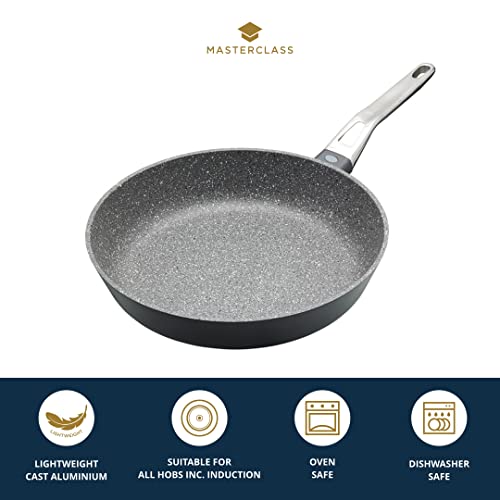


The Masterclass skillet uses a sol-gel ceramic coating applied in three separate layers, each cured at high temperature to bond with the aluminum substrate. This process creates a surface harder than traditional non-stick films, so metal utensils won’t scratch through during normal use.
Sizing and capacity
At 10 inches across the cooking surface, this skillet handles two chicken breasts, four burger patties, or a three-egg omelet without crowding. The 2-inch sidewalls contain splatter when you’re pan-frying and give you room to toss vegetables without spilling.
The pan weighs 2.1 pounds empty—light enough for one-handed flipping, heavy enough to signal quality construction. Total length from handle tip to rim is 18 inches, so it fits comfortably on standard 8-inch and 10-inch burners. If you cook for more than four people regularly, consider pairing this 10-inch model with our 12-inch skillet for larger batches.
Care and maintenance
Ceramic non-stick requires less babying than polymer coatings, but a few habits will keep your Masterclass skillet performing like new. Let the pan cool before washing—thermal shock can crack any ceramic surface. Use a soft sponge and dish soap for daily cleaning; baked-on residue lifts easily with a paste of baking soda and water.
Avoid aerosol cooking sprays, which leave a sticky polymer film that builds up over time and interferes with the non-stick surface. A light wipe of oil or butter before cooking provides better release and protects the coating. For detailed instructions on maintaining all our ceramic finishes, see our full cleaning guide.
What makes this skillet different
More from our Masterclass collection


Customer reviews


Common questions about the Masterclass skillet
Yes, the ceramic coating is harder than traditional non-stick films and can handle metal spatulas, whisks, and tongs during normal cooking. That said, we recommend silicone or wood utensils when possible to maximize the coating’s lifespan. Avoid cutting or chopping directly in the pan, which can scratch any cookware surface.
The skillet is dishwasher safe, but hand washing extends the life of the ceramic coating. Dishwasher detergents are abrasive and can dull the finish over time. A quick scrub with warm soapy water takes less than a minute and keeps the pan looking new.
Ceramic coatings are made from inorganic minerals cured at high heat, while traditional non-stick uses PTFE (Teflon) polymers. Ceramic is free of PFOA, PTFE, and PFAS, and it tolerates higher oven temperatures—up to 500°F in our skillet. Traditional non-stick begins to degrade above 400°F and releases fumes at very high heat.
Preheat the skillet over medium heat for one to two minutes before adding food, and use a small amount of oil or butter even though the surface is non-stick. Avoid cooking sprays, which leave a residue that builds up and interferes with release. Clean the pan after each use to prevent carbonized oils from forming a sticky layer.
Yes, the pan is oven-safe to 500°F, which includes use under a standard broiler. The stainless handle will get hot in the oven, so always use a potholder when moving the skillet. Keep an eye on cook times under the broiler—ceramic coatings conduct heat efficiently and food can brown faster than in a traditional pan.
All non-stick coatings wear gradually with use, but ceramic surfaces last longer than polymer films when cared for properly. Hand washing, using moderate heat, and avoiding aerosol sprays will keep the coating intact for years. If the surface does lose its non-stick properties over time, our lifetime warranty covers defects in materials and workmanship.
The pan performs best on 8-inch and 10-inch burners, where the flame or heating element matches the base diameter. You can use it on a smaller 6-inch burner, but heat distribution will be less even. On a 12-inch burner, keep the flame or heat setting moderate to avoid overheating the edges.